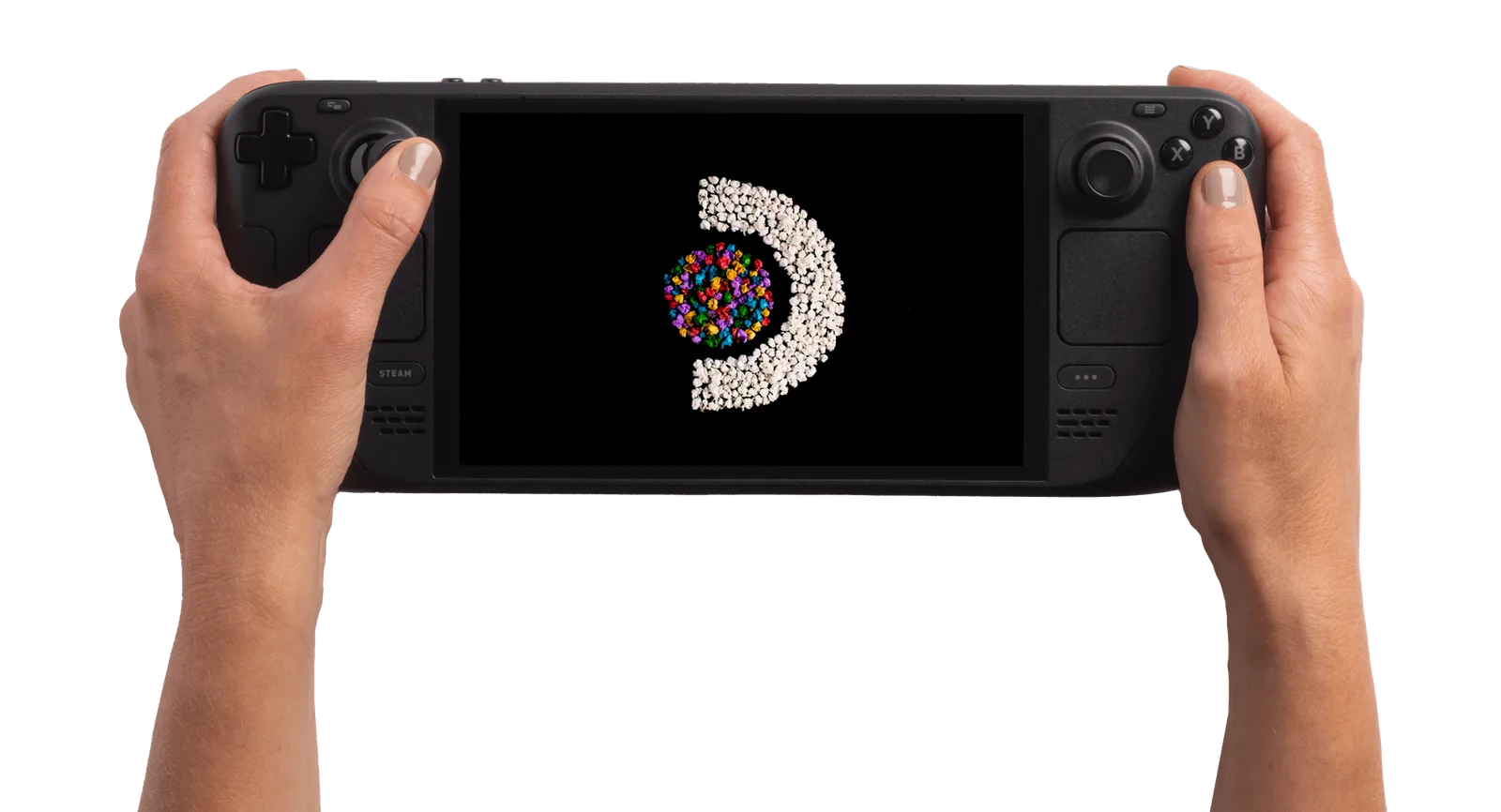
What Actually Changed From the LCD Model
The OLED revision isn't a cosmetic refresh — the two upgrades that matter are the screen and the battery, and both hold up under scrutiny rather than just sounding good on a spec sheet.
The 7.4-inch HDR OLED panel supports 1000-nit brightness and a 90Hz refresh rate, replacing the LCD model's washed-out contrast with genuinely deep blacks — OLED only draws power from lit pixels, so darker games and UI-heavy menus specifically use less energy, not just a general efficiency bump. Combined with a 50Wh battery (a 25% capacity increase over the LCD's 40Wh), independent testing puts the real-world gain at roughly 15-20% longer sessions under typical mid-tier game loads, and up to 12 hours for light gaming — not the vague "all-day battery" claim some handhelds make without a number attached.
Wi-Fi 6E support brings download speeds up to 3x faster than the LCD model, which matters more than it sounds for a device where big game installs happen over the same connection you're trying to game on.
The Part That Changes the Verdict: Price
In May 2026, Valve raised prices significantly: the 512GB OLED went from its original price to $789, and the 1TB model to $949 — increases of roughly 40-46%, attributed to rising component costs and logistics pressure. Both configurations reportedly sold out within hours of the restock that introduced the new pricing, so availability isn't guaranteed even at the higher price.
This matters because the OLED's value case at launch was straightforward: meaningfully better screen and battery for a modest premium over the LCD model. At $789-949, the calculation is closer — the hardware improvements are still real, but the price now sits close to a PS5 in some markets, which changes who it makes sense for.
If you want the same hardware for less, Valve's own refurbished units run $629 (512GB) and $759 (1TB) — meaningfully cheaper than new stock for identical hardware, backed by Valve's own refurbishment process rather than a third-party reseller. Worth noting: Valve doesn't sell the Steam Deck through Amazon or other major retailers, so buying direct (new or refurbished) is the only way to avoid paying a reseller markup on top of an already-increased price.
Who This Is Actually For
At current pricing, the OLED makes the most sense if you specifically care about screen quality and battery life — someone replacing a Nintendo Switch as a primary handheld, or anyone who's used the LCD Deck and found the washed-out screen and battery life to be real complaints, not nitpicks. If price is the primary constraint, check refurbished stock first, or wait for the next restock cycle rather than paying a scalped premium during a shortage window. Worth knowing if you're on the fence: there's no Steam Deck 2 on the horizon yet, so buying the current OLED isn't a bet against an imminent successor.
Once you've got one, the accessories actually worth adding are a smaller, cheaper decision than the Deck itself — worth reading before you assume you need everything on a typical accessory list.
The Verdict
The screen and battery upgrades are real, tested, and worth having — the 2026 price hike is the actual story here, not the hardware. 8.0/10 at current new-unit pricing; closer to 8.7 at the refurbished price point, where the same improvements cost meaningfully less.
Steam Deck OLED
Pros
- 90Hz HDR OLED display with real 1000-nit brightness and deep blacks, not an incremental bump
- 50Wh battery (up from 40Wh) plus the OLED panel's per-pixel power draw adds up to noticeably longer sessions
- Up to 3x faster Wi-Fi 6E versus the LCD model
- Refurbished units from Valve are a legitimate way to get the same hardware at closer to original pricing
Cons
- 2026 price hike (+40-46%) makes it a harder recommendation at MSRP than at launch
- Stock has been inconsistent — both configurations reportedly sold out within hours of the last restock
- Still the same core hardware generation as launch — no CPU/GPU upgrade alongside the price increase
 Reviews
NTE: Neverness to Everness Review (2026): Worth Playing?
Hotta Studio followed Tower of Fantasy with a bigger, stranger open world. Six months after launch, here's an honest look at what Neverness to Everness actually gets right — and where it doesn't.
 News
NewsSteam Deck 2: Valve Says It's Close, One Issue Left
No release date yet — but Valve confirms Steam Deck 2 is real and 'getting there.' Here's the exact chip problem holding it back, and what to buy today instead.
 News
NewsROG Xbox Ally X20 Preorders Are Live: OLED Screen, $1,299.99, October 15 Launch
Preorders for the ROG Xbox Ally X20 opened August 25, bringing the first true OLED screen to ASUS's handheld lineup. Here's what actually changed, the price, and what to know before you commit.