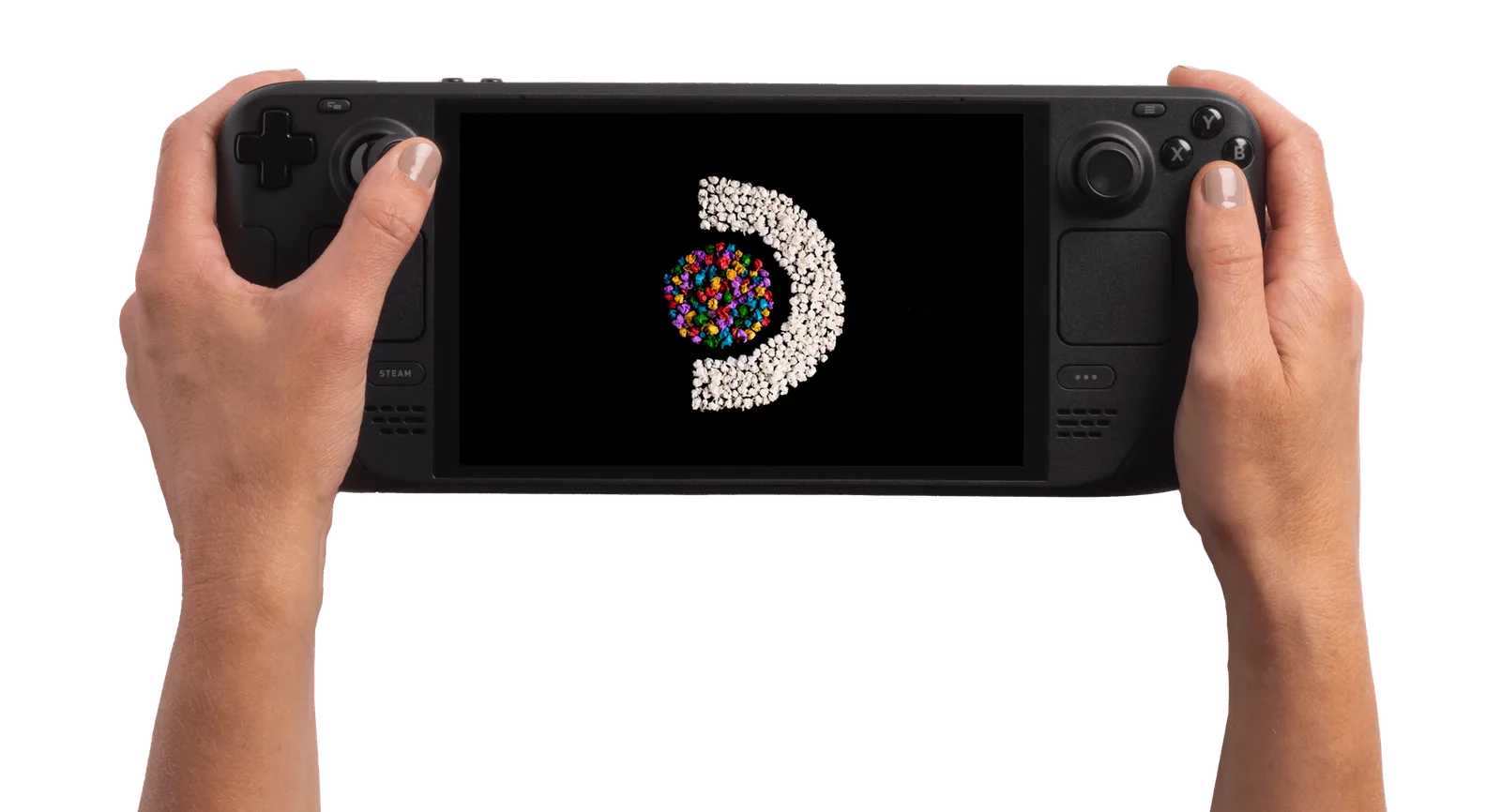
There is still no Steam Deck 2. Not a release date, not a reveal event, not even an official name — but Valve has been consistent about one thing: a successor is genuinely in the works, and the holdup is hardware, not indecision.
The company's position hasn't shifted much through 2026. It wants a real generational jump in performance without the device drawing more power than the current model. Until a chip exists that can deliver that, Valve says it isn't shipping anything.
What Valve Is Actually Waiting For
The bottleneck is specific: Valve wants silicon that runs efficiently well under 10W without sacrificing performance, and it says nothing currently shipping hits that target cleanly. Newer chips exist, but they tend to land in power envelopes built for laptops or larger handhelds, not the tight thermal and battery budget a device like the Steam Deck has to work within.
Valve engineer Pierre-Loup Griffais summed up the state of things directly: "I'd say we're closer than we were the last time we talked. We're definitely getting there." He also noted, in the same breath, that "the new chips that are coming out are still in power envelopes that are not quite the right segment that you'd want for a true handheld experience."
That's about as concrete as the update gets: real progress, no promise of a date, and a chip market that hasn't yet produced what Valve is looking for. Anyone reading recent rumors as a hint that an announcement is close should treat that as speculation, not something Valve has confirmed.
Steam Deck 2 Isn't the Only Valve Hardware Stuck Waiting
Steam Deck 2 doesn't exist in isolation — it's one piece of a broader Valve hardware push that also includes the Steam Machine (a living-room PC) and Steam Frame (a VR headset), alongside a new Steam Controller. Griffais has described the pattern as deliberate, saying you can "draw a straight line from the original Steam Controller and Steam Machine to Steam Deck" in how Valve builds hardware across generations instead of one-off releases.
That broader lineup is running into the same wall Steam Deck 2 is: component costs. The Steam Machine, originally targeted around $750, launched at $1,049 — a jump of more than 30% — after a global RAM shortage driven by AI data-center demand pushed DRAM contract prices up more than 170% year-over-year between Valve's November 2025 announcement and mid-2026. RAM alone has roughly doubled in price since October 2025.
That's the real backdrop behind Valve's "the right chip hasn't arrived" line on Steam Deck 2. It isn't just about finding silicon efficient enough — it's about finding silicon efficient enough at a cost that doesn't repeat what just happened to the Steam Machine's price tag.
The Leaks You've Seen vs. What Valve Has Actually Confirmed
If you've come across specific Steam Deck 2 specs online — a 6-core Zen 4-based CPU, an RDNA GPU built from 8 compute-unit clusters, LPDDR5X memory, a 900p OLED panel at 90Hz — treat them as unverified. Those numbers trace back to a single unconfirmed forum leak from January 2024 that also predicted a Q3–Q4 2026 launch window. That window has now closed with no reveal, no reservation page, and no official specs from Valve — a strong sign the leak either was never accurate or has been overtaken by Valve's own hardware delays since.
Everything Valve has actually said on the record is limited to the power-efficiency target described above and Griffais's comment that development is "closer than we were the last time we talked." No chip, no price, no date. Anything more specific than that circulating online is speculation past what Valve has confirmed.
What This Means If You're Deciding What to Buy Now
The lack of a timeline matters more than it might seem, because it comes on the heels of a real price hike on the current hardware. Valve raised Steam Deck OLED pricing earlier this year, with the 512GB model now at $789 and the 1TB model at $949 — increases of roughly 40 to 46% over original launch pricing. That combination (higher prices, no successor in sight) is exactly what's fueled speculation about a Steam Deck 2 in the first place, even though Valve itself hasn't tied the two together.
Practically, that leaves two reasonable paths if you're a current or prospective Deck owner. If you already own one, putting that money into accessories instead is a far better use of it right now than holding off in anticipation of hardware that has no confirmed release window. If you're deciding whether to buy in at all, the current Steam Deck OLED remains a legitimate purchase on its own merits — the screen and battery upgrades over the original LCD model are real, and there's no indication a successor is close enough to justify waiting.
The bottom line: Valve is working on it, the chip constraint it's described is specific and credible rather than a vague excuse, and nobody outside the company has real visibility into when that changes. Until an actual chip meets Valve's power target, the current hardware is what's actually available to buy — treat anything more specific than that as rumor until Valve says otherwise.
 Reviews
NTE: Neverness to Everness Review (2026): Worth Playing?
Hotta Studio followed Tower of Fantasy with a bigger, stranger open world. Six months after launch, here's an honest look at what Neverness to Everness actually gets right — and where it doesn't.
 News
NewsROG Xbox Ally X20 Preorders Are Live: OLED Screen, $1,299.99, October 15 Launch
Preorders for the ROG Xbox Ally X20 opened August 25, bringing the first true OLED screen to ASUS's handheld lineup. Here's what actually changed, the price, and what to know before you commit.
 News
NewsNvidia Hikes RTX Prices Again: RTX 5090 Nears $4,700 in Third 2026 Increase
Nvidia has raised GeForce RTX prices for the third time this year, pushing the RTX 5090 close to $4,700 — more than double its launch price. Here's why it's happening, and why it barely changes anything if you're building on a sane budget.