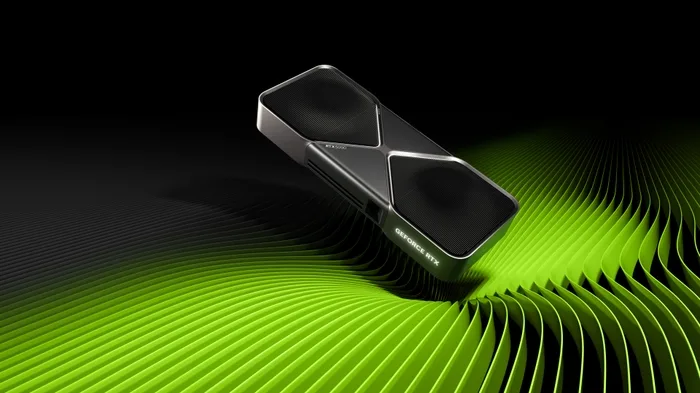
GeForce RTX cards just got more expensive for the third time this year. Following increases in January and May, Nvidia's latest round pushes prices up another 20 to 30% across the RTX 50-series lineup — and it's the flagship that shows just how far things have drifted from launch pricing.
The RTX 5090 is now selling for roughly $4,700. It launched at $1,999. That's not a scalper markup or a temporary stock spike — it's where the card is actually settling as retail pricing, more than double what Nvidia originally charged for it.
Why This Keeps Happening: It's the Memory, Not the Chip
The cause isn't a shortage of GPU dies or a manufacturing bottleneck at Nvidia. It's memory. DRAM pricing has climbed sharply this year, with Samsung's DRAM costs alone reportedly up around 20%, and memory now accounts for more than 80% of the total bill of materials on a high-end graphics card. When the component that makes up the bulk of the card's cost gets more expensive, the finished product follows — regardless of how efficient or in-demand the GPU silicon itself is.
The underlying driver is demand from AI data centers, which are absorbing a growing share of global memory production. Consumer graphics cards are now competing for supply against buyers with far deeper pockets and far less price sensitivity, and gaming GPUs are losing that fight on pricing.
The math is straightforward: when VRAM is over 80% of a card's cost and DRAM prices jump 20%, the finished GPU has nowhere to go but up — regardless of what the chip inside it is actually capable of.
What This Actually Means If You're Building a PC
If you weren't planning to buy a $2,000-plus flagship GPU, this news changes essentially nothing for you. The RTX 5090 was never the sensible choice for a normal gaming budget, and its price climbing further into enthusiast/workstation territory doesn't move the calculation for anyone building a realistic setup.
The mid-range tiers are where actual gaming budgets live, and they remain the right call regardless of what's happening at the top of the stack. Our beginner PC build guide already recommends the RTX 5060 Ti at around $399 (the ASUS Dual OC specifically) and the RTX 5070 at roughly $599 (the PNY OC Triple-Fan) for exactly this reason — both deliver strong 1080p-to-1440p performance without any exposure to the memory-driven pricing chaos happening at the flagship end. If anything, the widening gap between flagship and mid-range pricing makes those tiers look like an even better deal than they did in January.
The honest takeaway: this isn't a temporary spike waiting to correct itself. As long as AI demand keeps absorbing the bulk of global memory supply, expect GPU pricing at the top of the stack to keep drifting further from MSRP — which is exactly why building around the mid-range, rather than chasing the flagship, remains the least risky way to buy a gaming PC in 2026.
 Reviews
NTE: Neverness to Everness Review (2026): Worth Playing?
Hotta Studio followed Tower of Fantasy with a bigger, stranger open world. Six months after launch, here's an honest look at what Neverness to Everness actually gets right — and where it doesn't.
 News
NewsSteam Deck 2: Valve Says It's Close, One Issue Left
No release date yet — but Valve confirms Steam Deck 2 is real and 'getting there.' Here's the exact chip problem holding it back, and what to buy today instead.
 News
NewsROG Xbox Ally X20 Preorders Are Live: OLED Screen, $1,299.99, October 15 Launch
Preorders for the ROG Xbox Ally X20 opened August 25, bringing the first true OLED screen to ASUS's handheld lineup. Here's what actually changed, the price, and what to know before you commit.